

“I had Claude + MCP wired up for myself in a weekend. Rolling it to 50 reps was a different problem entirely — and the one nobody was solving.”
RL
AnonymizedRevOps · B2B SaaS
One semantic GTM layer your RevOps configures once — so every AE, SDR, and CSM gets the same answer, with the same context, from the same data.





Claude + MCP works for one power user. Attive works for the whole sales team.
The moment AI moves past the early adopter on the team, the DIY-MCP shape of it falls apart — four ways, every time.
“I had Claude + MCP wired up for myself in a weekend. Rolling it to 50 reps was a different problem entirely — and the one nobody was solving.”
Every rep configures their own connectors, auth, and prompts. RevOps can't see or govern any of it.
Agents lose the thread between Salesforce, Gong, the warehouse, and Slack. Every chat starts from zero.
Without entity resolution, every rep gets a slightly different read on the same account, deal, or call.
Every account brief, every meeting prep, every pipeline question routes through one inbox. It doesn't scale.
Your CRM, your calls, and your product data all point to the same accounts and people.
Connections, permissions, and GTM ontology live in one place — not in 50 separate MCP setups.
You're the one who gave the team superpowers.
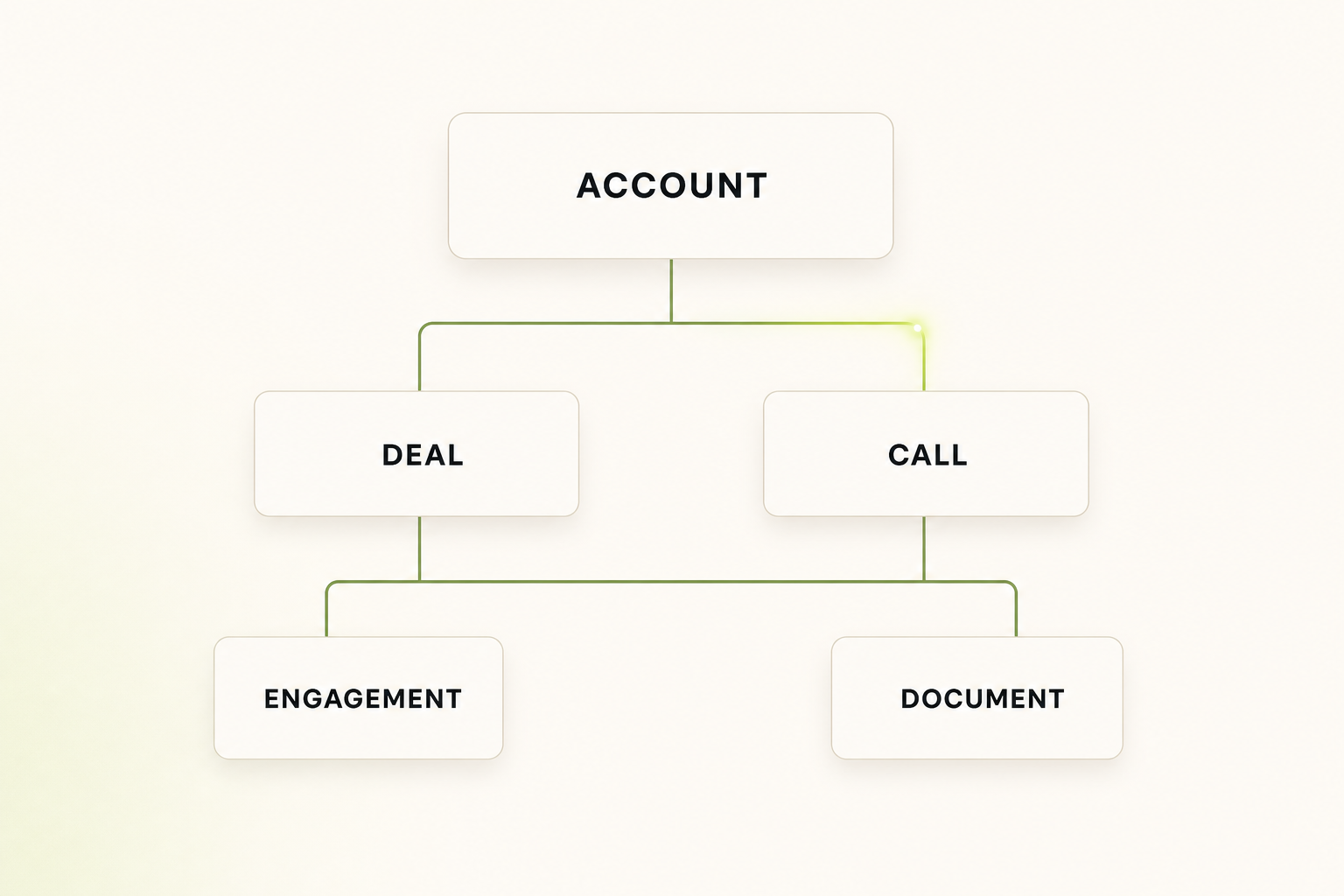
CRM, calls, warehouse, Slack — once.
RevOps maps accounts, workflows, permissions.
Same AI baseline for every AE, SDR, CSM.
Not another chatbot with tool access. The operating context.
Renewal risk is elevated. Executive engagement is strong, but usage dropped 18% in the last 14 days, two open support tickets remain unresolved, and the latest call mentioned budget pressure for next quarter.
4 sources“What started with one champion is now five of our seven GTM managers — they see Attive as a gamechanger.”
“Attive allowed us to establish a reliable and low effort way to keep our customers and prospects at the center of our business. Being able to dive deep into thousands of conversations across sales, customer success and internal discussions helped us become more data driven.”
Skills, Tasks, Rules, Marketplace, usage insights, voice dictation, and a refreshed workspace.
New agent harness with human-in-the-loop, citations, and self-service onboarding.
Documents in the workspace — upload, search, and cite GTM context in chat.
Six things RevOps and GTM Engineering leaders ask before rolling Attive to the whole commercial team.
Attive is built for RevOps and GTM Engineering leaders at 50–300-person B2B SaaS companies who need to roll a governed AI baseline to the whole commercial team — not just the one power user who wired up Claude + MCP.
Claude with MCP gives one person tool access. Attive gives the whole team operating context: shared GTM definitions, entity resolution across CRM and calls, permissions, reusable workflows, and source-backed answers from one semantic layer RevOps configures once.
RevOps connects your stack (CRM, calls, warehouse, Slack), maps accounts and permissions, and defines the GTM ontology and workflows. After that, reps ask questions and run automations without touching connectors or prompts.
Salesforce, HubSpot, Gong, Slack, support tools, product usage data, documents, and warehouses — mapped into one graph, not just connected. See all integrations →
No. Your CRM stays the system of record and Gong stays your call intelligence source. Attive sits across those systems to answer cross-source GTM questions and turn recurring work into repeatable workflows.
AEs and CSMs ask account and pipeline questions in chat, run meeting prep and briefs, and receive scheduled Slack digests. RevOps maintains connectors, permissions, and workflows — the team gets consistent answers without becoming the human API.
One setup by RevOps. Consistent AI for every AE, SDR, and CSM. No GTM Engineering required on the front line.